Key Takeaways from the Future Place Land Lease Communities Summit 2026
The Future Place Land Lease Communities Summit wrapped up last week, and if there was one overarching message from the day, it was that the land lease sector has entered a new stage. What was once viewed primarily as a development and real estate venture is evolving into something more sophisticated.
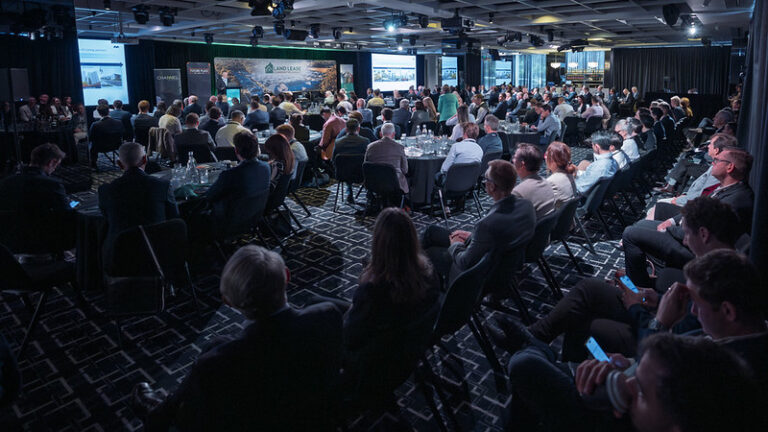
Throughout the day at Doltone House in Sydney, discussions centred on operational excellence, resident experience, scalable platforms and the attention the sector is receiving from institutional capital.
Here are the key themes that defined the summit.
Resident Experience Is Becoming Central to the Sector
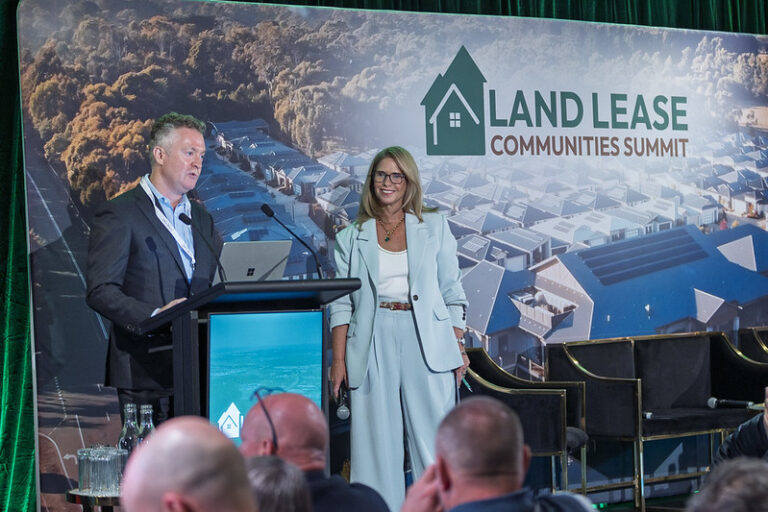
One of the most resonant threads throughout the summit was the human side of downsizing. Kate Melrose (Charter Hall, UDIA Chair) opened and closed the day with a reminder that when someone considers moving into a land lease community, they are rarely just thinking about the property.
They are asking questions like:
- Can I downsize without losing control of my life?
- Will I actually enjoy where I end up?
- Can I trust the people I am buying from?
- Is this next chapter going to feel like a compromise or a reward?
These are emotional questions, and the sector is starting to take them seriously. There was depth in the discussions around social isolation, family influence on purchasing decisions and the importance of building communities where residents feel genuinely connected rather than simply housed.
Customer and resident experience will drive the land lease sector as it continues to build the trust it needs to scale responsibly. The industry is moving beyond delivering lots. It is increasingly in the business of delivering lifestyle, wellbeing and long-term community outcomes.

Operations as the Key Competitive Advantage
Perhaps the most consistent commercial theme across multiple panels was that land lease is fundamentally an operational asset class.
Stuart Strong (Hometown) explained: the quality of an operator’s operations business is becoming a major differentiator, particularly as communities grow larger and resident expectations rise with them.
Several speakers reinforced why this matters from an investor perspective. Institutional capital is no longer backing individual developments alone. Investors are backing operating platforms.
Management team quality matters. Resident satisfaction, retention and growth are all downstream of how well a community is actually run day to day.
The conversations covered everything from wellness programs and social engagement to the consistency of experience across communities and the systems and processes needed to make that possible at scale.
Technology came up repeatedly as a genuine enabler here. Resident apps, communication platforms and portfolio visibility tools are no longer nice-to-haves. They are becoming part of what separates operators who scale well from those who do not.
Institutional Capital Continues to Build Momentum
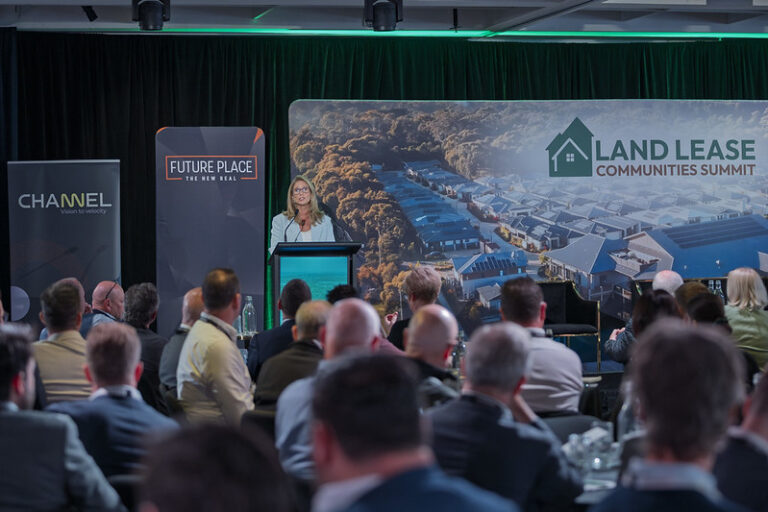
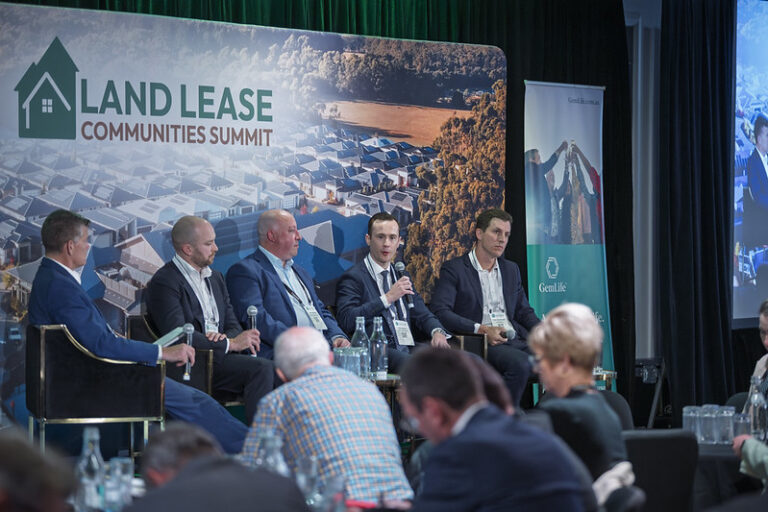
The investment outlook for land lease communities remains strong, and the Investment and Capital Trends panel reflected that confidence.
A few themes stood out. Capital is now flowing to both established operators and emerging platforms. Investors are increasingly framing this as operational real estate rather than passive property investments. And there is a broad expectation as the sector matures that scale enables investment into the systems, technology and experience that drive long-term returns.
The phrase “platform, platform, platform” was used repeatedly to describe where investor focus is shifting. That phrase is worth sitting with, because it signals that the era of backing a single development or a handful of sites is giving way to backing operators with the infrastructure to run hundreds of homes at a high standard.
The panel also touched on the US market, where large-scale portfolios backed by groups such as Blackstone have demonstrated the operational efficiencies possible at a significant scale, and where financing maturity offers a useful window into where the Australian market may be headed.

Planning and Regulation Remain a Significant Barrier
Despite the optimism around investment and growth, planning and regulatory constraints remain one of the sector’s biggest challenges.
NSW was highlighted as a particular challenge. Despite having arguably the strongest demand profile of any state, planning inconsistency, a lack of familiarity with the land lease model within some local government bodies, difficulty securing suitable sites and ongoing policy uncertainty are all creating real friction for operators and investors alike.
Queensland was viewed more positively from a planning perspective, though speakers noted that there remains significant work to do at the local government level in educating decision-makers about what land lease communities actually are and what they can deliver for communities.
The broader housing crisis also featured heavily in these discussions. Land lease communities have a meaningful role to play in supporting ageing in place, unlocking underutilised housing stock, encouraging downsizing without pressure and reducing social isolation.
As a result, planning reform is not simply a commercial issue. It is becoming a broader policy conversation.
Getting Customer Experience Right Has Commercial Consequences
Tom McDonald (Springtree and Elka Capital) brought a strong operational perspective to the discussion around customer experience: if you do not get the resident experience right, communities become harder to manage, harder to market and harder to sell.
The roundtable discussions that followed explored the details behind that idea, including: The move-in experience. Resident onboarding. Community activation. Social clubs, events and competitions. Encouraging use of common spaces. Buddy systems for new residents. Gathering and acting on resident feedback.
The insight that stood out was that referrals are often the best indicator of whether a community is actually working. If residents are recommending their community to friends and family, the experience is landing. If they are not, something is off.

Vertical Land Lease and the Next Evolution of the Sector
The fireside conversation exploring the idea of vertical land lease was one of the more forward-looking discussions of the day. The themes of simplicity, connection and low-maintenance living that are fundamental to traditional Land Lease remain central to what can make the vertical land lease model appealing. But making affordable vertical land lease financially viable is genuinely difficult, and it’s likely that projects will tend to skew toward the premium end of the market.

The Numbers That Put It in Context
A few sector statistics shared throughout the day are worth noting:
- Market penetration currently sits below 2%
- The target demographic is expected to grow significantly over coming years
- The sector is projected to roughly double in size, from approximately $12 billion to $24 billion
- Demand continues to outpace supply in many regions
- Institutional interest continues to strengthen
Closing Thoughts
Kate Melrose’s closing reflection captured the day well: “It’s not just about the places we’re building, but also about the resident experience.”
That sentence could serve as a strategic compass for the sector. The land lease communities that win over the next decade will not simply be the ones that build the most homes or secure the most capital. They will be the ones that deliver communities where people genuinely want to live, where operations run smoothly at scale and where the resident experience holds up across thousands of front doors.
The Future Place Summit reinforced that the sector is asking the right questions. Now it is a matter of execution.
Related Links
- Land Lease Communities Summit Land Lease Communities Summit
- Future Place Future Place
Join the Revolution: Embrace Our Resident App Today!
Ready to experience a revolution in residential living? Reach out now and embrace the future of living and become part of a vibrant, empowered movement redefining the way we live.